Tongue Tie
Tongue tie, or ankyloglossia, occurs when a tight or restrictive lingual frenulum limits tongue movement. The presence of a visible frenulum alone does not mean that treatment is required. Management depends on whether the restriction is causing a genuine functional problem, particularly with feeding.
Overview
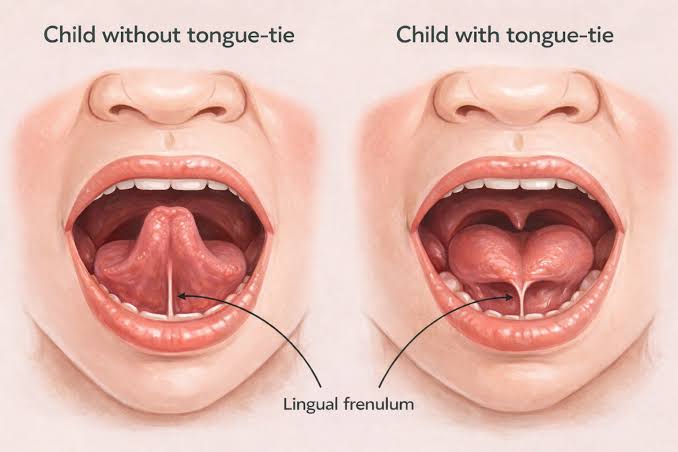
The lingual frenulum is the normal band of tissue connecting the underside of the tongue to the floor of the mouth. In some children, this tissue is tight or restrictive enough to limit tongue movement. This is known as tongue tie, or ankyloglossia.
The condition varies considerably between children. Some infants have a visibly short frenulum but feed normally and require no treatment.
Tongue tie becomes clinically important when restricted tongue movement is associated with a genuine functional problem, such as persistent breastfeeding difficulty that has not improved after appropriate feeding and lactation support.
Diagnosis should therefore focus on tongue function rather than appearance alone.
A restrictive frenulum that limits tongue movement
Based on tongue function, not appearance alone
Other causes of feeding difficulty must also be assessed
Intervention is considered when meaningful functional problems remain
What is Tongue Tie?
The lingual frenulum is a normal band of tissue extending between the underside of the tongue and the floor of the mouth.
With tongue tie, the frenulum is tight or restrictive enough to reduce the tongue's ability to elevate or move forward normally.
In some children, the tip of the tongue may appear heart-shaped when it is extended. However, appearance alone does not determine the severity of tongue tie or whether treatment is required.
The important question is whether tongue movement is sufficiently restricted to interfere with feeding or other age-appropriate functions.
Possible Symptoms and Feeding Problems
Many children with a short or visible lingual frenulum have no symptoms.
When tongue restriction is functionally significant in an infant, possible feeding-related features may include:
• Difficulty maintaining an effective latch.
• Long or inefficient feeding sessions.
• Poor milk transfer.
• Inadequate weight gain.
• Persistent maternal nipple pain or trauma during breastfeeding.
However, these problems are common and may have many causes other than tongue tie.
Breastfeeding difficulty or maternal nipple pain alone is therefore not enough to diagnose symptomatic tongue tie.
Diagnosis
Assessment begins with a detailed feeding and growth history followed by examination of the mouth, tongue and tongue movement.
The clinician may assess:
• Ability to elevate the tongue.
• Ability to move the tongue forward.
• Movement and appearance of the tongue tip.
• Sucking and swallowing function.
• Growth and weight gain.
• Other abnormalities of the mouth, jaw or palate.
When breastfeeding is the main concern, observation and assessment of feeding are important because ineffective latch or milk transfer may have causes unrelated to the lingual frenulum.
A complete assessment helps determine whether the frenulum is genuinely responsible for the problem or is simply an anatomical variation that requires no treatment.
Treatment
Not every child with tongue tie requires a procedure.
If the child feeds normally and has no meaningful functional impairment, intervention is generally not needed simply because a restrictive-looking frenulum is present.
When breastfeeding difficulties occur, feeding and lactation assessment should usually come first so that other causes and correctable feeding problems can be addressed.
If a significant functional problem continues despite appropriate support and assessment indicates that restricted tongue movement is contributing to the problem, release of the lingual frenulum may be considered.
The procedure is commonly known as a frenotomy and involves releasing the restrictive part of the frenulum to improve tongue mobility.
Treatment decisions should be individualized and should not be based solely on the visual appearance of the frenulum.
There is insufficient evidence to support frenotomy in an asymptomatic infant solely to prevent possible future problems such as speech difficulties.
Before the Procedure
Before considering frenotomy, the child's symptoms and functional difficulties should be evaluated carefully.
When breastfeeding is the primary concern, feeding should be assessed and other possible causes of difficulty should be considered first.
Before the procedure, parents should have an opportunity to discuss:
• Why the procedure is being considered.
• The expected benefit for the child's current problem.
• Available alternatives.
• Pain-control options.
• Possible risks such as bleeding, infection or reattachment.
• Post-procedure care and follow-up.
The medical team should also be informed about medications, medical conditions and any known bleeding problems.
For young infants, relevant medical history including vitamin K administration should be reviewed by the medical team.
After the Procedure and Follow-up
After frenotomy, the child is observed for problems such as bleeding and is followed to determine whether the functional difficulty that led to treatment has improved.
When frenotomy is performed for breastfeeding difficulties, continued feeding or lactation support may still be needed because releasing the frenulum does not automatically correct every cause of ineffective breastfeeding.
Some temporary discomfort may occur, and parents should follow the medical team's instructions regarding feeding, pain relief and oral care.
The medical team should be contacted if the child develops:
• Persistent or recurrent bleeding.
• Significant difficulty feeding.
• Persistent refusal of feeds or fluids.
• Increasing swelling or signs of infection.
• A significant fever.
• Any unusual symptoms that concern the family.
Routine postoperative exercises that repeatedly reopen or stretch the wound are not recommended unless the treating medical team provides specific instructions for the individual child.
Follow-up should focus on improvement in function and symptoms rather than simply the appearance of the frenulum.
Frequently Asked Questions
Does every child with tongue tie need surgery?
No. Many children have a short or restrictive-looking frenulum without any functional problem. If feeding and tongue function are normal, treatment is generally not required simply because the frenulum is visible.
How can tongue tie affect breastfeeding?
Functionally significant tongue restriction may contribute to poor latch, ineffective milk transfer, inadequate weight gain or persistent maternal nipple pain. These problems also have many other causes, so a complete feeding assessment is important.
Is appearance alone enough to diagnose tongue tie?
No. Clinically significant tongue tie depends on restricted tongue movement together with a genuine functional problem, not simply the appearance of the frenulum.
What is a frenotomy?
Frenotomy is a procedure in which the restrictive portion of the lingual frenulum is released to improve tongue movement when the restriction is contributing to a significant functional problem.
Should frenotomy be performed to prevent future speech problems?
There is insufficient evidence to recommend frenotomy in an asymptomatic infant solely to prevent possible future speech difficulties. Speech concerns that develop later should be assessed according to the child's age and specific difficulty.
Are all breastfeeding problems caused by tongue tie?
No. Breastfeeding difficulties are common and may result from many infant, maternal and feeding-related factors. A complete feeding assessment is therefore important before treatment is considered.
Are stretching exercises required after frenotomy?
Routine exercises that repeatedly stretch or reopen the wound after frenotomy are not supported by sufficient evidence and are not routinely recommended. Parents should follow the specific postoperative instructions provided for their child.
Book Your Consultation
If you are concerned about your child's tongue movement or there is persistent difficulty with breastfeeding or feeding, you can book a consultation to assess tongue function and determine whether treatment is needed.